Need tree removal in Kettering?
Tell us about your tree, send a request, or ask a question. Thereforejohn Tree Service will point you to a local provider in our network who can take a look.
No obligationRequest a tree removal estimate
A tree problem changes by the hour. A cracked limb hangs for a night, then drops in the next gust. A trunk on a roof lets in rain, and the damp spreads. Thereforejohn Tree Service is a referral service. We connect homeowners in Kettering and the Kettering area with independent providers in our network who do the cutting.
This page walks through what happens first, what you can safely do yourself, and where to stop. It also covers price, permits, and the questions to ask before anyone starts a saw. Read it in two minutes, then request an estimate. The provider you are matched with sets the plan and the written quote. You decide if it fits.
A tree that is down, split, or leaning hard is a hazard right now. Do not walk under it. Do not touch anything it rests on. Treat every wire in or near the branches as live.
Get everyone out of the fall zone. Keep kids and pets inside. If the tree is on a power line or blocking a road, contact the utility or local emergency services first.
Then Request a callback to check provider availability for emergency tree removal. Many providers can respond quickly when a tree threatens a home.
Clear the zone. That is your job, and it matters.
Stay off the roof. Skip the chainsaw on any trunk that is bent, pinned, or under tension, because it can spring when cut. Do not climb a ladder into a leaning tree. Do not drag limbs off wires. Ask before sawing, and let a pro with the right gear take it from here.
Storm tree clearance gets busy fast after hail and severe thunderstorms. Providers book up, so earlier requests tend to get earlier visits. Wet ground from heavy rain or spring flooding can also let a leaning tree shift again.
If the tree opened your roof, rain is now reaching the attic. Providers can often help document damage for a claim. Some policies may cover sudden damage, so check your policy.
Split trunks dry and twist. Hanging limbs can drop without warning. Damp insulation and ceiling boards can start growing mold within days. A tarp job and a removal plan should both be moving by now.
Deep frost and ice add weight to cracked limbs. Frost can also heave roots and tilt a trunk. Rot spreads, pests move in, and a job that needed one climber may now need a crane. Delay usually makes the work bigger and the quote larger.
Most removals start with one of these:
The provider walks the site first. They look at lean, rot, wires, fences, and access. Then they pick a plan.
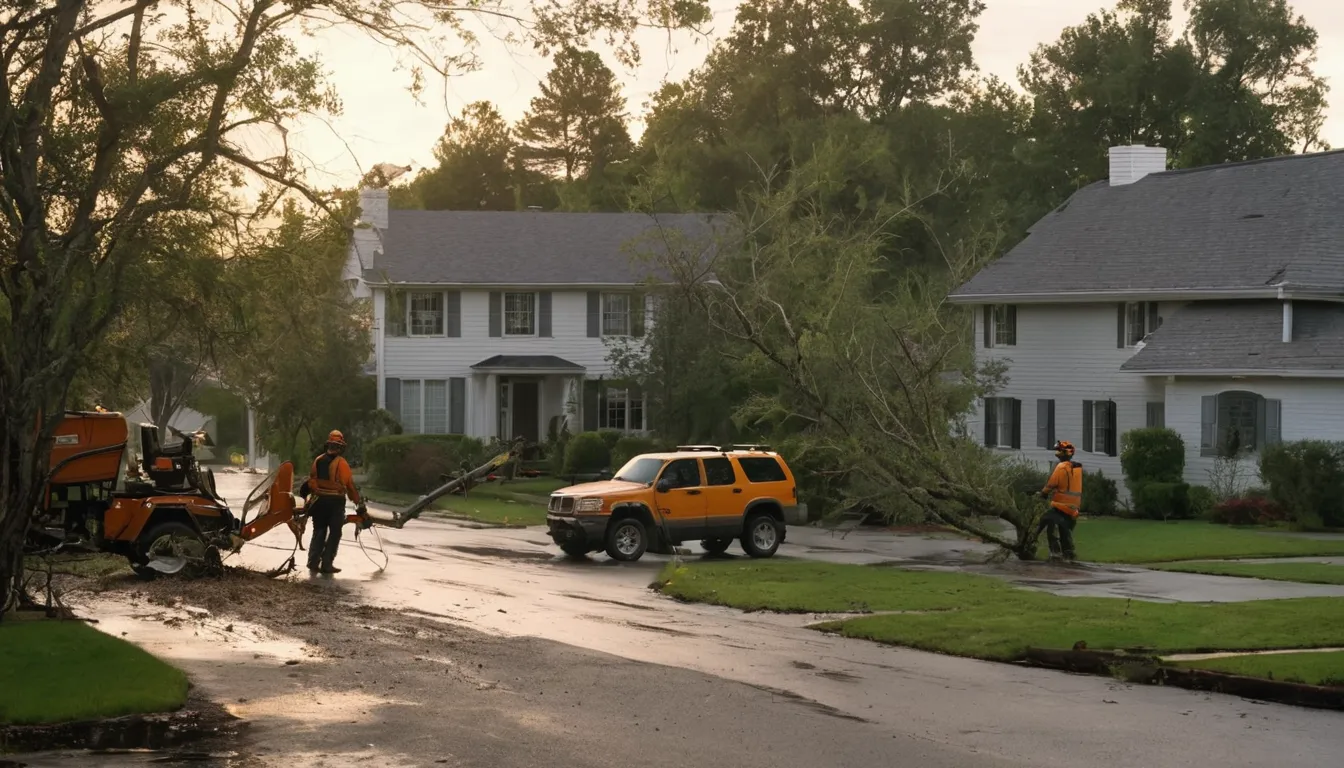
A climber or bucket truck takes the tree down in sections. Ropes lower heavy pieces. In tight yards, a crane lifts them over the house. Crews cut the wood to size and haul away the debris. Ask if the stump stays or goes.
Height, trunk width, and access matter most. A tree over a roof costs more than one in an open yard. Dead wood is riskier to cut. Cranes, wires, and cleanup add to the total. Get the price in writing.
Some towns require a permit for large or protected trees. Homeowner associations may have their own rules. Trees tangled in power lines are a job for the utility. Check with your local city office before the work date, and ask the provider what they know about local rules.
It is specific. The provider names the method, the gear, and the price. They point out risks without being asked. They are fine with you checking insurance before work starts.
Walk away from anyone who knocks on doors after a storm and wants cash up front. Be wary of vague quotes, pressure to sign today, or advice to top a healthy tree. Skip anyone who cannot show insurance.
Move cars off the drive and street. Clear a path to the tree. Mark sprinkler heads and buried lines. Keep pets inside, and warn neighbors. Unlock gates and leave access open.
Walk the yard with the provider. Check the roof, gutters, fence, and lawn. Decide what to do with the wood and the stump. Fill low spots and watch for drainage changes near the basement. Keep the written quote and receipt for your records.
A provider checks lean, rot, wires, and access, then explains the plan before any cutting begins.
Climbers or lifts remove the tree in manageable pieces, lowered by rope or crane to protect your roof.
Limbs and trunks are cut to size and hauled off, if cleanup is part of your written quote.
You get the scope, price, and cleanup terms on paper before any saw starts running.
Prices vary a lot by tree size, access, and risk. These are typical U.S. ranges for common jobs. Your own quote may be higher or lower, so always ask for a written estimate.
| Item | Typical range | Notes |
|---|---|---|
| Small tree, under 30 ft | $150 – $600 | Open access, healthy wood |
| Medium tree, 30–60 ft | $500 – $1,500 | Price rises near a house or fence |
| Large tree, over 60 ft | $1,200 – $3,500 | Often needs rigging or a lift |
| Storm-damaged tree on a structure | $1,500 – $5,000 | Risk and tension raise the price |
| Crane add-on | $500 – $2,000 | For tight yards or heavy trunks |
| Debris haul-off and cleanup | $75 – $500 | Check if it is in the quote |
Move cars and people away, keep clear of wires, and take photos from a safe distance.
Tell us about the tree, its location, and any damage to the home.
Compare scope, cleanup, insurance proof, and price with the provider.
Clear access, keep pets inside, and walk the site together afterward.
Removing a weak tree early protects your roof, cars, and family from sudden drops.
Acting sooner often avoids crane work and added damage.
A written quote shows scope, cleanup, and price before work begins.
Independent providers know area soil, storms, and rules.
Tell us about your tree, send a request, or ask a question. Thereforejohn Tree Service will point you to a local provider in our network who can take a look.
No obligationIt depends on provider schedules and storm demand. Many providers can respond quickly when a tree threatens a home. Request a callback to check provider availability, and be ready with photos and the tree's location.
Small limbs on open ground, maybe. Never cut a tree that is under tension, touching wires, or resting on a house. Stop, then call a provider.
Some policies may cover sudden damage, such as a tree falling on a house. Coverage varies, so check your policy. Providers can often help document damage for a claim, and you should ask your insurer what applies.
Tell us about your tree, send a request, or ask a question. Thereforejohn Tree Service will point you to a local provider in our network who can take a look.
No obligation